
Transform Your Workplace: Create a Culture of Respect
Respect@Work - Have you taken all reasonable steps?
The Federal Government changed the law in late 2022. The laws have imposed a new 'positive duty' on all employers. This requires all employers to take reasonable steps to eliminate sexual harassment from occurring in the workplace. Responding to complaints when they arise is no longer enough.
There is no exemption under this law - not even for small business. No matter the size of the business, if reasonable steps are not taken to eliminate sexual harassment and sex-based harassment in the workplace, the employer could be held liable and face considerable financial and reputational damage to the business. Some of the recent legislative changes are already in effect, however further changes including new avenues for employees to pursue claims and the Human Rights Commissions powers to actually enforce the new ‘positive duty’ on employers will take effect from 13 December 2023.
"Ready to turn psychosocial risk into organisational resilience? Let’s talk about how our Respect@Work Series can safeguard your people, boost performance and protect your bottom line."
Psychosocial Safety
Our Respect@Work series is specifically designed to minimise the risk of work‑related psychosocial hazards such as harassment, bullying, discrimination and the stress claims that can follow, by equipping every level of your organisation with the awareness and tools to recognise, call out and prevent harmful behaviours before they escalate. Beyond compliance, our broader suite of programs builds resilience and psychological safety by targeting the root causes of common hazards:
Showing Respect@Work
Constructive Performance Conversations
Creating a Feedback Culture

Builds a psychologically safe, respectful workplace and helps prevent discrimination, bullying and sexual harassment. Team members learn the harm these behaviours cause, then practise role-plays and bystander strategies, and clarify how to report and escalate concerns. The program supports your positive duty under the Respect@Work legislation to prevent sexual harassment, sex discrimination and victimisation.
Creating a Feedback Culture
Constructive Performance Conversations
Creating a Feedback Culture
The natural follow-on from Respect@Work. Staff learn to give and receive high-quality feedback without blaming, defending, justifying or shaming, using constructive language that builds growth and understanding instead of defensiveness. It's highly interactive, with fun role-plays and deep, values-driven discussion. Many participants say it helps in their personal relationships too.
Constructive Performance Conversations
Constructive Performance Conversations
Constructive Performance Conversations
Helps leaders approach performance conversations with clarity, confidence and care. We start by reconnecting leaders with their values, so they see why these conversations matter for wellbeing, service, trust and results, and how avoiding them lets issues grow. Leaders learn to stay calm when people respond with defensiveness, frustration or emotion, while still holding them to account.
Leading with Psychological Safety
Leading with Psychological Safety
Constructive Performance Conversations
Equips leaders to reduce psychosocial risk through everyday leadership behaviour. Grounded in Australian legislation, psychological safety research and neuroscience, it turns evidence into practical tools: regulating under pressure, holding clear conversations, and keeping both safety and operational standards. It's highly interactive and built on real-world scenarios.
How to be an Upstander
Leading with Psychological Safety
Inclusive, Diverse Teams
Empowers people to step in safely when they see harassment or bullying. Through role-plays, participants practise communication and de-escalation, learn to spot early warning signs, and use your policies and reporting channels so incidents are addressed and prevented. Everyone leaves with a personal upstander action plan.
Inclusive, Diverse Teams
Leading with Psychological Safety
Inclusive, Diverse Teams
Shows leaders and teams how to build an inclusive, equitable workplace for everyone, regardless of gender, age, disability, sexual orientation, gender identity, ethnicity, religion or culture. Through courageous dialogue and practical tools, participants learn to recognise and address unconscious bias, stereotypes, prejudice and double-binds. The payoff is greater innovation, efficiency and results.
Migrant and refugee women:
A national study of experiences of, understandings of and responses to sexual harassment in the workplace. Click here.
Technology-facilitated sexual harassment in the workplace:
Technology-facilitated sexual harassment in the workplace: Perpetration, responses and prevention. Click here.
Sexual harassment of LGBTQ young people
Sexual harassment of LGBTQ young people in the workplace and workplace training. Click here.
Why Power & Harassment Go Hand In Hand, & 5 Things You Can Do About It
Here are five specific steps leaders can take to prevent harassment, which is one of the topics of Kim Scott's new book Just Work: Get Sh*t Done, Fast & Fair. Cick here to read the article.
Disrespected, Disregarded, and Discarded:
Workplace exploitation, sexual harassment and the experience of migrant women living in Australia on temporary visas. Click here.
Time for respect:
Fifth national survey on sexual harassment in Australian workplaces. Click here.








Respect@Work Training

Procreate is the leading creative application made for iPad and has a wonderful team of people behind its success. Respect@Work is one of their core programs.
Everyone has the right to be safe and free from sexual harassment while at work.
However, there are different legal responsibilities for different people in the workplace. Visit the Respect@Work's website to learn about the 'Legal responsibilities'. Respect@Work: Sexual Harassment National Inquiry Report (2020) recommended the adoption of new framework to more effectively prevent, and respond to, workplace sexual harassment. The new framework recognises that a more holistic, approach is necessary, one that looks beyond policies, training and complaint-handling procedures. This approach recognises that sexual harassment is primarily driven by gender inequality and power imbalance and looks at all the steps that can be taken within workplaces to better prevent and respond to it. It more effectively meets an employer’s positive obligation to provide a safe, harassment-free workplace. The Respect@Work workplace prevention and response framework is a thorough and comprehensive approach to erradicating sexual harassment from Australian Workplaces. To learn more about how People for Success can help with a risk assessment contact us.

Respect@Work
Respect@Work is now Law
Psychologically Safe Workplace
Respect@Work is now Law
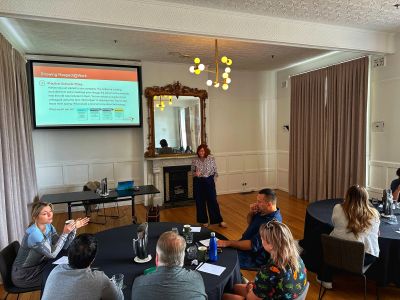
Respect@Work 2 to 3.5 hour sessions support organisation's to take all reasonable steps to prevent workplace sexual harassment and to comply with new vicarious liability provisions of the Fair Work Act.
Respect@Work Act
Psychologically Safe Workplace
Respect@Work is now Law
The amendments to the Fair Work Act and Sexual Discrimination Act ultimately mean organisations that fail to take reasonable steps to prevent workplace sexual harassment may be subject to enforcement action and/or civil penalties.
Psychologically Safe Workplace
Psychologically Safe Workplace
Psychologically Safe Workplace
Taking proactive steps to address discriminatory and harassing conduct and tackle problematic cultures will help to create respectful, productive workplaces. We can help you create respectful and psychologically safe workplaces and meet your requirements to prevent psychosocial hazards at work.
Our Respect@Work Programs
Psychologically Safe Workplace
Our programs focus on supporting leaders and teams to create a psychologically safe and respectful workplace. They support the organisation to prevent workplace discrimination, bullying and sexual harassment by helping team members understand the harm those behaviours cause. Our programs provide practical role-plays, bystander strategies and clarification of the reporting & escalation process.
This is NO tick-box Respect@Work
Many training providers deliver a bland program that ticks a box. Sure, it shows that reasonable steps were taken to prevent sexual harassment and disrespectful behaviour but does it change the culture? This program is run by our Founder Kristyn Haywood who has been a Human Resources Executive herself. Her entertaining and animated delivery style, together with her extensive first-hand experience makes her the perfect facilitator to run this important program.
Approaches to Respect@Work
We deliver different types of Respect@Work programs depending on your specific requirements. We can tailor a program to suit your culture. We may research your engagement scores, isolate certain problem behaviours and work in a targeted way to eliminate disrespect. We host Respect@Work monthly circles with some clients to practice speaking up against disrespect@work. Speaking up is a habit that can be built with practice.